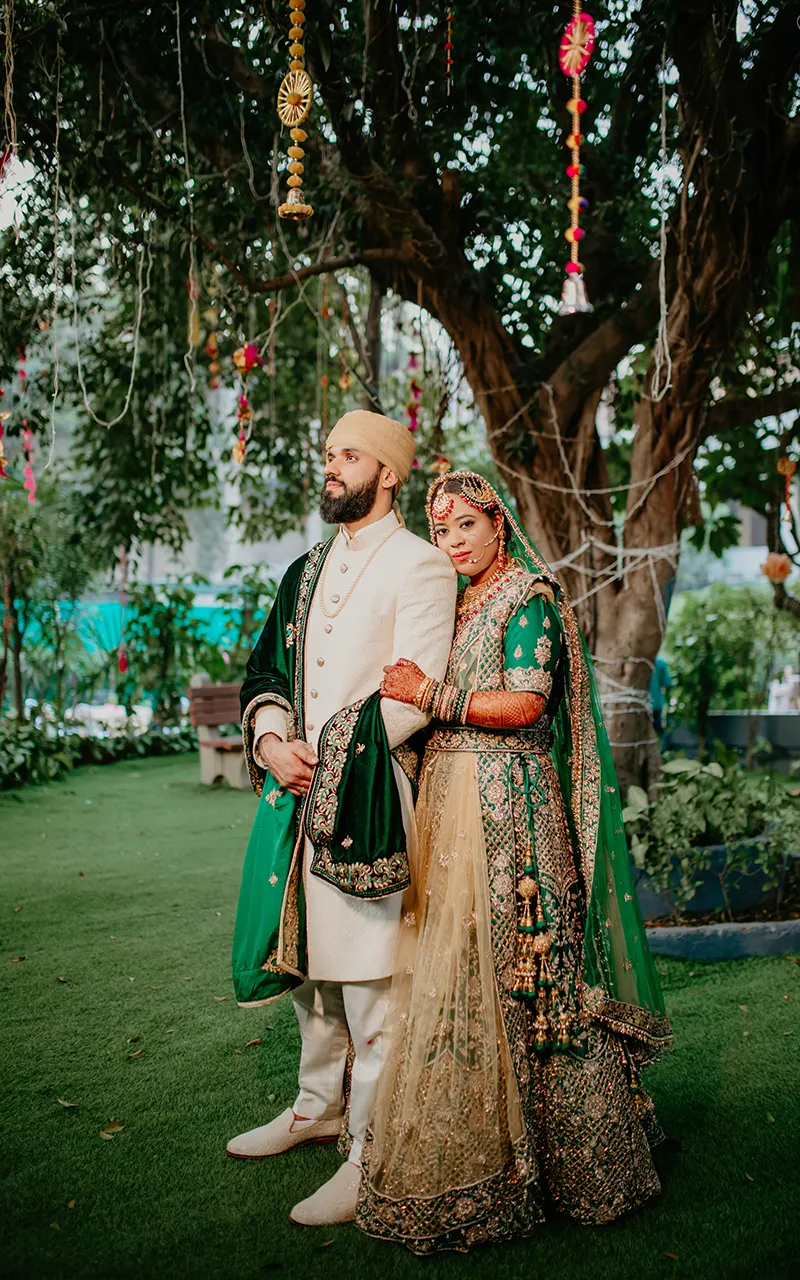
A haldi is joyful, messy and over quickly. A little planning around timing, light, setting and outfits lets your photographs keep every bit of it.
Of all the wedding functions, the haldi is the one couples tend to plan last and remember most fondly. Family gathers close, turmeric paste is smeared on cheeks and arms, someone always starts a flower fight, and within an hour everyone is laughing and yellow. It is also one of the most photogenic rituals of an Indian wedding, provided a few practical things are thought through beforehand. Here is what we suggest to couples in Delhi NCR.
What the haldi is, and why it photographs so well
The haldi is a pre-wedding ritual in which family members and close friends apply a paste of turmeric to the bride and groom, traditionally as a blessing before the wedding. The paste is usually mixed with ingredients such as gram flour, sandalwood and rose water, and recipes vary from family to family. Many communities have their own name and form for it: Punjabi families often know it as the maiyan, and in Rajasthani and Gujarati weddings it is the pithi.
What makes it so good on camera is that nobody is performing. Unlike a stage or a mandap, the haldi is close, hands-on and unscripted. Grandmothers concentrate, cousins sneak up from behind, and the couple stops posing within the first few minutes. That is exactly why it rewards a little planning: the moments are real, so the setting and the light need to be ready for them.
Choose the time of day with the light in mind
The haldi is usually held in the morning or early afternoon, often on the day before the wedding or on the wedding day itself. Daylight is its natural partner. Soft, bright light makes turmeric glow and skin tones look warm and true, which is hard to recreate under artificial lighting later in the day.
- Late morning to early afternoon is usually the most dependable window. In the winter months, early mornings in Delhi can be foggy or hazy, which is why we often suggest waiting until the fog has lifted. Our guide to winter wedding photography in Delhi covers the season's light in more detail.
- Avoid the harshest midday sun in the warmer months if the setting is completely open. Hard overhead light creates squinting and deep shadows under the eyes.
- Allow time to clean up. Turmeric takes a while to wash off. If the haldi is on the wedding day, leave a generous gap before hair and make-up for the next event.
Pick a setting that works in daylight
The best haldi settings in Delhi NCR are often the simplest: a lawn at a farmhouse, a terrace, a courtyard at home, or a poolside at a hotel. A few things make a setting work well for photographs.
- Open shade. A canopy, a fabric shamiana, trees or the shaded side of a building gives soft, even light on faces. Pastel or white fabric overhead works beautifully; dark or strongly coloured fabric can cast its colour onto skin.
- Room around the couple. The seating should be placed so that family can approach from the front and sides, and so that the photographer can move around without stepping into the ritual.
- A clean background behind the couple. Look at what sits directly behind the seat: a floral backdrop or greenery is lovely; a parked car, a catering counter or a generator is not.
- Indoors, use the windows. If the haldi has to be inside, place the couple facing or beside a large window rather than under ceiling lights.
Décor that adds to the photographs
Haldi décor does not need to be elaborate to look beautiful. Marigolds, a low floral seat, brass or terracotta urlis, and fabric in yellow, white or soft pastels all photograph well. What matters more than scale is a few considered details.
- Keep the area around the seat uncluttered. A tidy space lets faces and expressions carry the frame.
- Prepare the haldi itself with care. A beautifully arranged thali or bowl with the paste, flowers and diyas makes a lovely detail photograph before the ritual begins, so set it out early.
- Plan the petals. Flower showers are among the most loved haldi photographs. Keep baskets of loose petals ready, and let your photographer know when they will be thrown so the moment is not missed.
- Protect the floor and the seat. Sheets or mats around the seat save the venue and let everyone relax and enjoy the mess, which always shows in the pictures.
Outfits: yellow, or not
Yellow is the traditional choice and looks wonderful with turmeric and marigolds, but it is not compulsory. Pastels, whites and soft florals are increasingly popular and stand out against a yellow setting. A few practical points:
- Wear something you are happy to stain. Turmeric marks fabric, often permanently.
- Choose light, breathable fabrics and comfortable footwear, especially for an outdoor haldi.
- Coordinate loosely with family rather than matching everyone exactly. A palette, such as yellow, white and mint, looks more natural than identical outfits.
- Keep jewellery light. Flower jewellery is a favourite at haldis, photographs beautifully and does not mind getting messy.
Moments to plan for
A haldi moves quickly, and the best photographs come from knowing roughly what will happen. Share the order of the ritual with your photographer, and mention any family traditions that might not be obvious, such as who applies the haldi first or a ritual specific to your community.
- The detail shots: the haldi bowl, flowers, hands and jewellery before it begins.
- Parents and grandparents applying the first haldi, usually the most emotional moment.
- Siblings and friends, who are rarely gentle.
- The flower shower, and any water or pool moments afterwards.
- A few quiet minutes for portraits of the couple, haldi on their faces, before everyone washes up.
If the bride and groom have separate haldis at the same time in different places, discuss coverage early, since one team cannot be in two homes at once.
Practical touches that keep everyone comfortable
- Keep towels, wet wipes and a change of clothes close by.
- Protect phones, watches and anything precious. Turmeric and water find their way everywhere.
- Have drinking water and something cool to sip for guests, particularly at an outdoor haldi.
- Ask guests to apply the paste gently around the eyes; a little care avoids discomfort later.
Let it be candid
The haldi is where a candid approach shines. There is little need for posing, and the best images come from a photographer who stays close, keeps out of the way and reads the room. If you are weighing up styles, our article on candid vs traditional wedding photography explains the difference, and our page on working as a candid wedding photographer in Delhi describes how we approach rituals like this one.
You can see how we photograph this ritual in our haldi gallery, and how complete weddings unfold in our real weddings.
If you are planning your haldi and would like to talk through timing, setting and coverage, message us on WhatsApp or share your dates through the enquiry page. We are always happy to help.