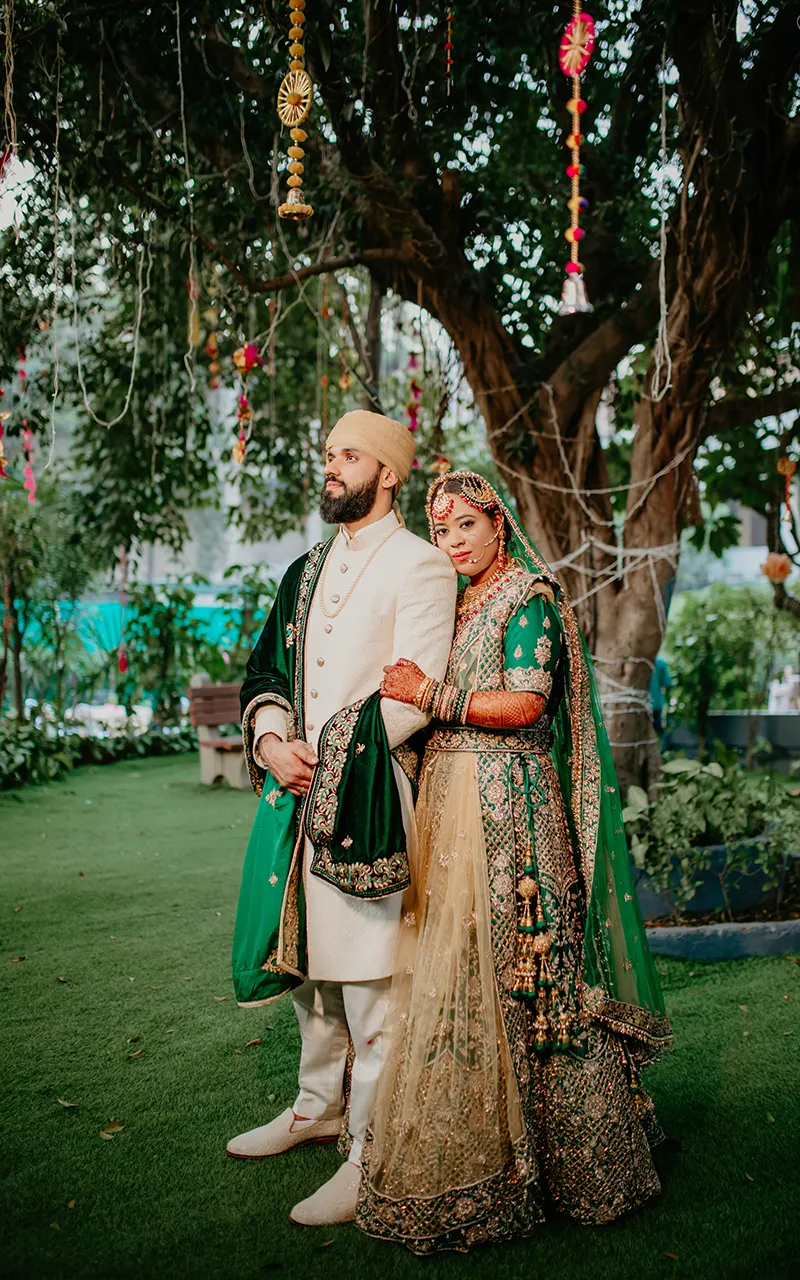
Candid or traditional wedding photography? Most Delhi NCR weddings need a little of both. Here is what each style captures and how to plan the balance.
It is one of the first questions couples ask us, and it is usually asked as if it were a choice between two different photographers. In practice it is a choice about attention: where the camera looks, who directs the moment, and what you want to be holding in your hands twenty years from now. This guide explains both styles plainly, so you can decide what your wedding actually needs.
What "traditional" photography means at an Indian wedding
Traditional photography is the record. It is the photographer who makes sure every aunt, every cousin and every family friend who came up to the stage has a clear, well-lit picture with the couple. It covers the rituals in order, from the front, with everyone's face visible. It is usually posed or semi-posed, and it is lit evenly so that nothing is lost in shadow.
Families sometimes speak of it a little dismissively, but it does a job nothing else does. When your parents want to show a relative who could not travel that they were remembered, it is the traditional set they reach for. When a grandparent asks for a print of the whole family together, it comes from here. For many Delhi families, the stage photographs with guests are not optional; they are a quiet courtesy to everyone who attended.
What "candid" photography means
Candid photography is the story. The photographer moves around the edges of the event, waits, anticipates, and photographs things as they happen rather than arranging them. It is the bride's sister fixing her dupatta minutes before the entry, the father's face during the pheras, the friend who cannot stop laughing at the sangeet, the hand on a shoulder during the vidaai.
Good candid work is not simply "unposed". It depends on reading people, choosing the right lens and position, and understanding how a ritual will unfold so the camera is already in the right place when the moment arrives. It also includes lightly directed portraits of the couple, where the photographer sets up the light and the place, then lets the two of you be yourselves within it.
The real differences, side by side
- Purpose. Traditional coverage aims for completeness: everyone and everything recorded. Candid coverage aims for feeling: the moments that tell you what the day was like.
- Direction. Traditional photographs are arranged; people look at the camera. Candid photographs are observed; people usually do not know the picture is being taken.
- Light. Traditional coverage often uses steady, even light so faces are always clear. Candid coverage tends to work with the light that is there, adding light carefully where needed, which gives more mood and depth.
- Where you will see them. Traditional photographs fill the family album and the prints for relatives. Candid photographs are the ones you frame, share, and return to.
- Who needs them most. Very often, parents value the traditional set and couples value the candid set. Both are right.
Why most weddings in Delhi NCR need both
A typical North Indian wedding here is several functions across two or three days, with large guest lists and a long line of guests coming up to the stage to bless the couple. If the only photographer present is following moments, the stage queue will be covered poorly or not at all. If the only photographer present is managing the stage, the emotional moments elsewhere in the room will be missed.
This is why many couples book a team in which different people carry different responsibilities: someone dedicated to family and stage coverage, someone free to follow the story, and, if you want one, a film team. The question is less "candid or traditional?" and more "how much of each, and at which function?"
How to decide the balance for your wedding
Think about your guest list
The larger the family and the more formal the reception, the more important structured family coverage becomes. A smaller wedding with close friends may need very little traditional coverage at all.
Think function by function
A haldi or mehendi is relaxed and full of spontaneous moments, so it suits a candid approach. A reception with a long stage line needs a dependable traditional record. The wedding ceremony usually needs both: a clear record of each ritual and a candid eye on the people watching it.
Ask your parents early
Many disagreements over photography come down to different expectations. Ask your parents what they would be upset to find missing. It is often a specific group photograph or a particular ritual. Telling your photographer this in advance costs nothing.
Look at full galleries, not highlights
Every studio's best twenty frames look wonderful. Ask to see a complete wedding, from start to finish, so you can judge how the candid and traditional coverage sit together. Our real weddings are full stories for exactly this reason.
Questions to ask a photographer about style
- Who on your team handles family and stage photographs, and who follows the candid story?
- How do you cover rituals so that both the record and the emotion are there?
- How much time do you need with the two of us for portraits, and when in the day do you suggest it?
- Can we share a list of must-have family groupings before the wedding?
- What will we receive, and how are the candid and traditional sets presented?
If you are comparing quotes as well as styles, our guide to what drives the cost of wedding photography in Delhi explains how team size and coverage change what you are being offered.
Where film fits in
The same distinction exists in video. A traditional video records the event in full; a cinematic film edits the day into a story with music and sound. Many couples keep a longer documentary edit for the family and a shorter film for themselves. You can see the difference in our wedding films.
To finish
Candid photography tells you how your wedding felt. Traditional photography makes sure no one who mattered is missing from it. The best coverage plans for both from the start, function by function, rather than choosing one and hoping the other takes care of itself.
We work across Delhi, Gurugram, Noida and destination weddings. Read more about us as a wedding photographer in Delhi or in Gurgaon. If you would like to talk through the right balance for your functions, message us on WhatsApp at +91 98106 21838 or write to us through our enquiry page.