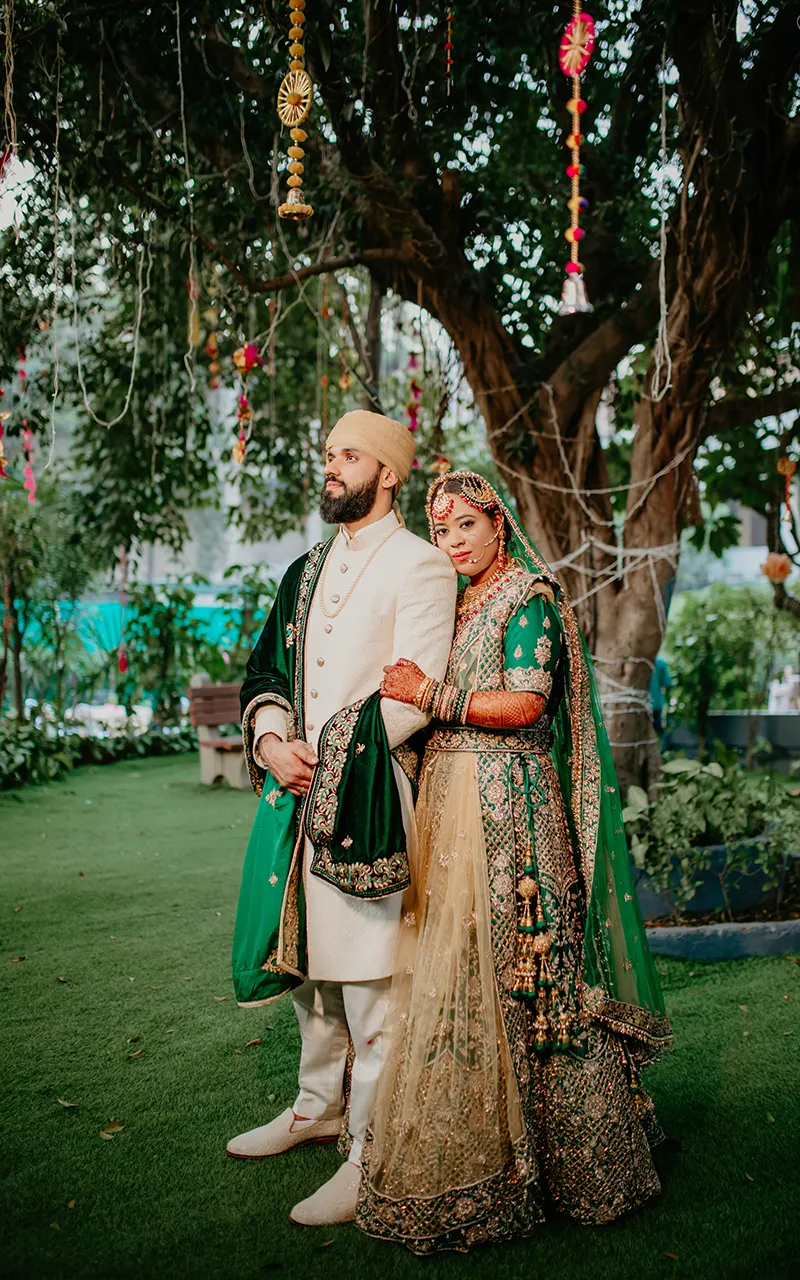
Winter weddings in Delhi bring fog, haze and sunsets before half past five. Here is how to plan your day so the light works for you, not against you.
From November to February, Delhi NCR hosts more weddings than at any other time of year, and for good reason: the air is cool, the outfits can be heavier and richer, and evenings around a bonfire feel exactly right. But winter also changes the light in ways couples rarely think about until the day itself. A little planning around the sun and the weather makes a visible difference to your photographs and your film.
Know when the light actually ends
In Delhi, the sun sets at around 5:25 pm through late November and most of December, then begins to drift later, reaching roughly 5:40 pm by the second week of January. Sunrise moves the other way, from about 6:40 am in early November to after 7 am through December and January. Usable twilight lasts only around 25 minutes after sunset.
In practice, that means the soft, flattering daylight most couples picture for their portraits is over by about 5 pm. A pheras ceremony, a couple shoot or a family portrait session planned for "the evening" will, in winter, happen in the dark. That is not a problem if everyone knows it in advance. It becomes one when a day-light portrait session is quietly pushed back by an hour because the baraat ran late.
Our suggestion: if natural-light portraits matter to you, schedule them between about 2:30 pm and 4:45 pm, and treat that window as fixed. Build hair, make-up and travel backwards from it, not forwards from breakfast.
Plan around fog, not against it
Dense fog is a regular feature of Delhi winters, usually at its thickest late at night and in the early morning, and most often from mid-December into January. The India Meteorological Department regularly issues fog alerts in this period, and in December 2025 fog led to dozens of flight cancellations and hundreds of delays at Delhi airport in a single day.
For your wedding, this matters in three ways:
- Morning events. A sunrise pre-wedding shoot or an early haldi outdoors may simply be swallowed by grey. Mid-morning, once the fog lifts, is more dependable.
- Travel. If guests, family or your photography team are flying in, or driving between Delhi, Gurugram and Noida at night, build in margin. A late-night pheras followed by a vidaai at 3 am can mean long, slow drives in poor visibility.
- Atmosphere. Light fog is not always the enemy. A little mist in a lawn lit by fairy lights or a bonfire can look beautiful on camera. What helps is a team that has seen it before and knows when to use it.
Haze and air quality
Early winter in Delhi often brings smog as well as fog. In the first days of November 2026, the city's air quality index crossed 300, in the "very poor" range, with some monitoring stations recording "severe" levels. Haze flattens distant backgrounds and turns skies a dull white.
This is a good reason to favour closer, more intimate framing for daytime outdoor portraits in November and December, and to choose locations with strong foreground detail, such as a garden, a courtyard, an archway or a beautifully dressed mandap, rather than wide skyline views. If you have a pre-wedding shoot planned, ask your photographer about a backup date, or a location that works well even under a pale sky.
Make the evening light beautiful
Because so much of a winter wedding happens after dark, the lighting at the venue becomes part of how your photographs look. A few things are worth discussing with your decorator and planner early:
- Warm, layered light over flat white floodlights. Fairy lights, lanterns, candles and warm uplighting on trees give depth and glow. Harsh white floodlights flatten skin tones and make everything look like a car park.
- Light on the faces, not just the décor. The mandap and the stage should be lit so that people's faces are visible, not only the flowers behind them. A beautifully lit backdrop with dim faces in front is a common winter disappointment.
- Coloured stage lighting in moderation. Strong reds, purples and greens on the sangeet stage can look exciting in the room but turn skin unnatural on camera. Ask the DJ or lighting team to keep a warm, neutral wash on the performers.
- A quiet corner for portraits. Ask for one area away from the main stage that is softly lit and uncluttered, where the two of you can step away for ten minutes.
Outfits and the cold
Winter is the season of velvet, heavy embroidery and shawls, and these photograph wonderfully. A few practical notes help them look their best:
- Plan how shawls, jackets and stoles fit into the look, rather than throwing on a random jacket between events. A matching shawl looks intentional in photographs; a puffer jacket does not.
- For outdoor evening portraits, keep warm layers close and take them off only for the few minutes of the shoot. Shivering shows on camera far more than people expect.
- Deep jewel tones such as emerald, maroon and midnight blue hold their richness under warm evening light. Very pale pastels can wash out under strong artificial lighting, so it is worth testing an outfit under the venue's lights if you can.
Bonfires, heaters and indoor spaces
Bonfires and patio heaters are lovely for guests and lovely in photographs, with warm light on faces and natural, relaxed groups. Let your photographer know where they will be placed. Indoor banquet halls, on the other hand, can be dim and crowded, with low ceilings. If your main events are indoors, ask your photographer how they handle low light without harsh, direct flash, and look at full galleries from indoor winter weddings rather than a few highlights.
A simple winter timeline
Every wedding is different, but a winter day that photographs well often follows a pattern like this:
- Late morning: getting ready, with window light in the room.
- Early afternoon: first look or couple portraits outdoors, while the light is soft and before haze thickens.
- Around 4 pm: family portraits, finishing before sunset.
- After 5:30 pm: baraat, varmala and the evening, lit by the venue.
- Late night: pheras and vidaai, with travel time allowed for fog.
Even if your rituals follow a muhurat that cannot move, simply knowing where the daylight falls lets you and your photographer protect the moments that need it.
Ask your photographer these questions
- How do you plan around early sunsets and fog for winter weddings?
- Can I see a full gallery from an evening or indoor winter wedding?
- How do you light portraits after dark without flat, harsh flash?
- What is the plan if fog delays your team's travel between events?
You can see how complete weddings look from start to finish in our real weddings, and how evenings feel in motion in our wedding films. We photograph weddings across the region, whether you are planning a wedding in Delhi, Gurugram or Noida.
If you are planning a winter wedding and would like to talk through your timeline and the light, message us on WhatsApp or send us your dates through the enquiry page. We are always happy to help, whoever you book.